Driving is frustrating. It's frustrating to try to predict unpredictable drivers, it's frustrating when you need to take four turns, cross a 5 lane road, and make a U-turn to get from the Bed Bath and Beyond to the PetSmart, and it's frustrating to need to take a car out on an large arterial road to get milk for the recipe when you run out.
As frustrating as driving in North America is, walking is often worse. I'd want to get my will and testament in order before walking from the Bed Bath and Beyond to the PetSmart on the opposite side of the road.
 |
| I hate this intersection. Especially on foot. |
Having had many conversations along these lines, among the first things I hear are "the car is the ultimate form of freedom," and "North America was built with the car in mind, unlike Europe, which was built in the time of horses and carriages." These are pretty easy to dispel. Cars are an absolute necessity for anyone living outside of a city center. Saying "cars are the ultimate form of freedom" strikes me much like saying refrigerators are the ultimate form of freedom because your refrigerator allows you to keep your food at a variety of temperatures. Cars are a requirement for participation in society, there is no freedom from cars outside of city centers. They allow you go anywhere, by often it's the only form of transport available. Being able to walk, take a car, bike, bus, or catch a train is a lot more free.
As for the "European cities are built different" gambit, this is a dodge. Cities are not static, they are rebuilt year after year. A moving feast. Most US cities were incorporated before cars were mainstream, and all have been retrofitted to become more car-centric. We've surrendered more and more public space to cars as years have gone on.
Some definitions will help in moving forward. For the purposes of this post, a "road" is made for efficiently transporting cars from one place to another. A road is not a place. Roads connect places. Roads have wide lanes, few connections or distractions, high speeds, and no land access. You must leave a road to access a business. Roads are designed by the mile. If you're traveling more than 50 mph, you're on a road.
 |
| Highway 287, south of Loveland. This road leads to Longmont |
Streets are places. You might go to a street to shop or run an errand, you may walk from one shop to another, have a meal, or sit on a bench. Things on streets are human scale. Small signs, sandwich boards, window displays, and wide sidewalks. Two story buildings with offices or apartments on the second floor. Streets are places of high productivity. Places like walking malls, college campuses, and Disney World are all incredibly productive, needing only slow streets to connect them; they transcend the need to accommodate cars. Streets are designed by the foot. If you're traveling less than 35 mph, you're probably on a street.
 |
| 4th between Lincoln and Cleveland in Loveland, one of my local streets. |
Enter the stroad. Stroads are the futons of travel: they have two functions and perform neither well. A stroad has two lanes of travel in either direction, long turn lanes, a center turn lane, many traffic lights, and stay on one long enough and you'll find powercenters (strip malls but with big box stores) on either side. They have many entrances and exits, but do not provide access to places. Sure you can get to the Home Depot, but that's not a place. It's not human-scale, it's car-scale. Stroads are designed by the 'hundreds of feet.' If you're going between 35 and 50 mph, you're probably on a stroad. This is the worst thing traffic engineers have unleashed.
Once you learn to recognize these, you see them everywhere. I'm so sorry (I'm not), but I'm going to absolutely ruin them for you. Stroads are ugly. It's not a place anyone outside of a car wants to spend any time, and if you're in a car, you're glad the speeds are high, so you can get somewhere else quickly.
Most accidents in cities occur on stroads, not highways (look up crash rates in your city). The wide lanes and highway-like design encourages fast driving speeds, regulated by enforcement, and not by design. Combine the high speed with lots of intersections, entrances and exits, and you have the most dangerous design possible. You would be hard-pressed to to purposefully design a road more dangerous than a stroad if that was your expressed goal. The design contributes to the fact that the US has the most dangerous roads of any developed country. 10.6 deaths/100,000/year vs 3-4 across most of Europe.
During the pandemic, road usage dropped, but the fatality rate/miles driven actually increased. So the only reason these stroads weren't killing more of us is because they were too congested to get going fast enough to kill anyone. The average risk of severe bodily injury increases from 50% at 31 mph to 75% at 39 mph. The average risk of death increases from 25% at 32 mph to 50% at 42 mph (source). Bear in mind stroads exist between 35 and 50 mph.
"But stroads at least get a lot of people from one place to another, right?" Well, they get a lot cars from one place to another. Cars are the worst way to carry lots of people. It's the suburb problem all over. Cars are not dense. Most cars contain one person, take up a whole lane, and cut across two lanes of traffic because they just remembered they DO need another towel from Target.
 | |
|
Assuming peak values, stroads can move 6,400 vehicles per hour. Changing the 5 lane stroad to a single lane in each direction, a center bus lane, and a two way bike lane in each direction, assuming the lowest values on the new street, actually increases capacity from 6,400 to 12,700. And that's taking the stroad from 5 lanes to 4. Add a sidewalk, and you're at 21,700. With slower vehicle speeds, you could also eliminate the clear zones (cleared out areas along the roadside for out-of-control cars to roll on into).
"This new street would be far more expensive though! Stroads are at least cheap, right?" No. Stroads require far more space and maintenance than comparable higher-capacity roads. Long, wide, and frequent turn lanes mean more asphalt, more traffic lights add cost and maintenance, as do high speeds.
The land that is served by stroads is incredibly low productivity. Parking lots are required, take up space, make no money, and pay little taxes. The land is very low-density by design, meaning a stroad serving powercenters is a high-cost, low-payoff way to use land.
 |
| Generic, low-productivity powercenter in Anywhere, USA. |
So stroads are bankrupting our cities, but at least they are ugly, inefficient, and unsafe while doing it.
While I'm at it, here's another thing that I'm sorry I'm going to ruin for you (not really). There is a better way to control speed than speed limit enforcement. Everyone hates getting a speeding ticket, but often it's not your fault. When designing environments, the designer has a duty of communication. When that fails, the designer, not you, has failed. Ever pull on a door with a vertical handle, and felt stupid when you realized it's a push door? Don't. The designer made the door with a signifier (vertical handle) that grants the affordance (ability) of pulling. You're not stupid for pulling, even if there is a sign that says "Push."
Design isn't value-free. When designing a door, the values aren't that relevant, but when designing a roadway, prioritizing things like speed or flow over safety is creating a design that comes with a value statement about human life.
Roads are designed just as much as door handles. There is a road that I drive that signifies and grants the affordance of driving 50 mph. Wide, straight lanes, no intersections or distractions signal that driving fast is okay, however the speed limit is 35. I once drove that road at 35, and felt deeply unsafe, being passed by traffic going 15-20 mph faster. Speeding on that road is the safer choice, as it was designed for a high speed. When the road design doesn't match the speed, you are left to constantly monitor your speed. Have you ever carefully monitored your speed on complex, narrow street with lots of distractions? Of course not—the road design matches the intended speed.
Future Scott here: I just got back from driving around Scotland, and the design of the roads there tell you the speed limit. Whenever I checked the speed limit, it was about the speed I was going every time. Big wide roads has higher speed limits. When the speed limit was lower, the road was narrow, curvy, and complex to navigate, naturally slowing me down. I never needed to look at a speed limit sign the whole time I was there. The car could just as well have not had a speedometer at all.
Back to Past Scott: Okay, this has been fun bit of taking down stroads and road design, but pointing out problems is always is the easy part and trying to come up with solutions is the hard part—except with these problems. The solutions can be so easy to implement. Small changes in regulations can make a HUGE difference in the livability of a city. It's almost comical how much of a problem these regulations cause, and how a few targeted changes can eliminate these problems. I find it quite heartening and a wonderful area to direct resources.
Changing the standards to which we build essentially gives us a new road system for free—it just takes a few decades. As roads are regularly updated, it doesn't cost anything more to update to different, safer standards. Many changes are as easy as literally repainting a road.
What follows are specific recommendations, targeted to fix these issues.
Simple Solution #1: Update road standards to human-centric designs.
Streets and roads should be designed with humans in mind. Currently, when designing a road, the intended speed is chosen, followed by projected volume. It is then made as safe as the speed and volume allow, and the cost falls out of the equation. Humans, when asked what they want from their streets and roads, will prioritize 1) safety, 2) cost, followed by 3) volume, then 4) speed. This is almost the exact reverse of how streets and roads are actually designed.
Currently, roads are designed for cars. Switching the standards to consider the other road users - pedestrians, bikes, people in wheelchairs, will lead to more useable, efficient, and higher capacity roads. Techniques like traffic calming can help bring the design of the road match the intended speed.
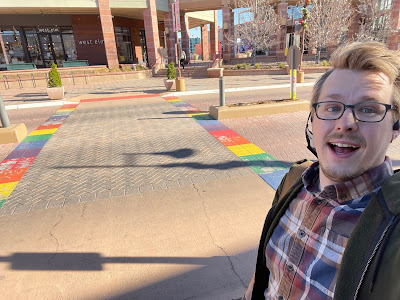 |
| The street here is brick, signaling that the car isn't the only user. The pedestrian crossing is on the same level rather than using a street cut. A pedestrian island in the middle means the pedestrian only has to look one way before crossing. |
 |
| Chicanes are used here to narrow lanes, protect turning bikes, and the mini roundabout disallows cars breezing through the intersection without looking for other users. |
This area is a huge rabbit hole. If you're interested in how to change standards with better designs, please look into the extra resources below. Traffic calming is just one of many arrows in the quiver.
Simple Solution #2: When updating stroads, slowly convert to streets or roads.
Stroads are not places like streets. Nor are they efficient at moving cars, like roads. Land can be used much more efficiently by creating dense, less car centric areas of high productivity where humans may actually want to spend time, with roads connecting these areas.
Stroad-to-road conversion:
- limit access
- prioritize throughput over access
- connect productive places
- embrace simplicity
Stroad-to-street conversion:
- Slow traffic (traffic calming)
- Prioritize people over throughput
- Build a productive place
- Embrace complexity
Better use of the space that stroads take up could take many forms. You can keep high speed travel in center lanes (roads) and have 'frontage roads' separated from high speed travel that includes all the intersections and complexity of a street. (Esplanade Street in Chico, CA does this). You can cut down to one lane in each direction, and include alternate travel options like sidewalks, public transit, and bike infrastructure to make these powercenters more productive. With less car demand, parking lots can be reclaimed into walkable places.
Simple Solution #3: When implementing alternate transit options, make them more convenient than driving.
On some trips, buses, or trains need to be the faster or cheaper option. If a bus gets a dedicated lane, it will arrive before the cars stuck in traffic. If the bus is more convenient, people will take the bus. If a bus is sitting in the same traffic as the cars, the only people who will use it are the people for who it is an ethical choice or those with no other options. The same goes for biking and trains. If trips are more convenient using other modes of travel, these modes of travel will get used. In Boulder, it is difficult to bike from off campus housing, but there is a convenient bus. Most students in Boulder take the bus. In Fort Collins, there is great biking infrastructure, so students bike. People will take the most convenient mode of transport, and creating more options means no one is forced to take any particular mode of transit. If you like driving, feel free to drive on the now less congested roads.
Changing the zoning rules and standards will change our cities. Every time a road or street gets an update, it can be brought up to the new standard. Cities aren't static; think to a time when you hadn't seen a city for 5+ years, and when you come back it seems unfamiliar. We've seen this happen before.
Car centric areas can be redesigned to reclaim area surrendered to cars and car infrastructure:


 |
| Before |
 |
| After |

 |
| Notice the sea of red around Angel stadium and the parking surrounding Disneyland in the upper left |
It's been done in the past; we can reclaim bad, car-centric, dangerous, and inefficient design and replace it with good, human-scale design.
In the US, we have a car culture, and no one is proposing to take that away. None of these interventions actually force cars off roads. They simply make the roads more efficient, more pleasant, and more productive.
Cheers,
- Scott
Email List: tinyletter.com/scottsieke
Extra resources:
- Confessions of a Recovering Engineer by Charles Marohn Jr.
- Strong Towns: A Bottom-Up Revolution to Rebuild American Prosperity by Charles Marohn Jr.
- The Deadly Myth That Human Error Causes Most Car Crashes
- City Beautiful on YouTube
- Not Just Bikes on YouTube


